












Doctors at Hackensack University Medical Center have performed the first commercial procedure in the United States using a newly approved catheter device that seals leaks around replacement heart valves. Hackensack Meridian Health announced the case on November 9, 2026. The device, the Abbott Amplatzer Paraclose PVL Occluder, recently received approval from the U.S. Food and Drug Administration and is the first transcatheter device in the country built specifically for this problem.
For patients in Hackensack and across Bergen County who have already had a heart valve replaced, the news means a leak around that valve can now be repaired at the local hospital through a small puncture in the leg rather than a second open-heart operation.
What a paravalvular leak is
When a surgeon or cardiologist replaces a heart valve, the new valve is meant to sit snugly against the surrounding heart tissue. Sometimes a small gap opens between the two. Blood then flows backward through that gap, a condition called a paravalvular leak, or PVL.
According to the hospital, these leaks show up in as many as 17 percent of mitral valve replacements and up to 10 percent of aortic valve replacements. Over time a leak makes the heart work harder and can bring on anemia, shortness of breath, swelling in the legs and, eventually, heart failure. Until now the main fix in the United States was another open-heart surgery, which carries real risk for people who have already been through one, along with a long recovery.
How the new procedure works
Instead of opening the chest, the care team threads a thin catheter through a blood vessel in the leg and guides it up to the heart. The Paraclose device is small and oblong, a shape meant to fit the irregular gaps these leaks tend to form. Once it is in place inside the leak, it expands and closes the opening.
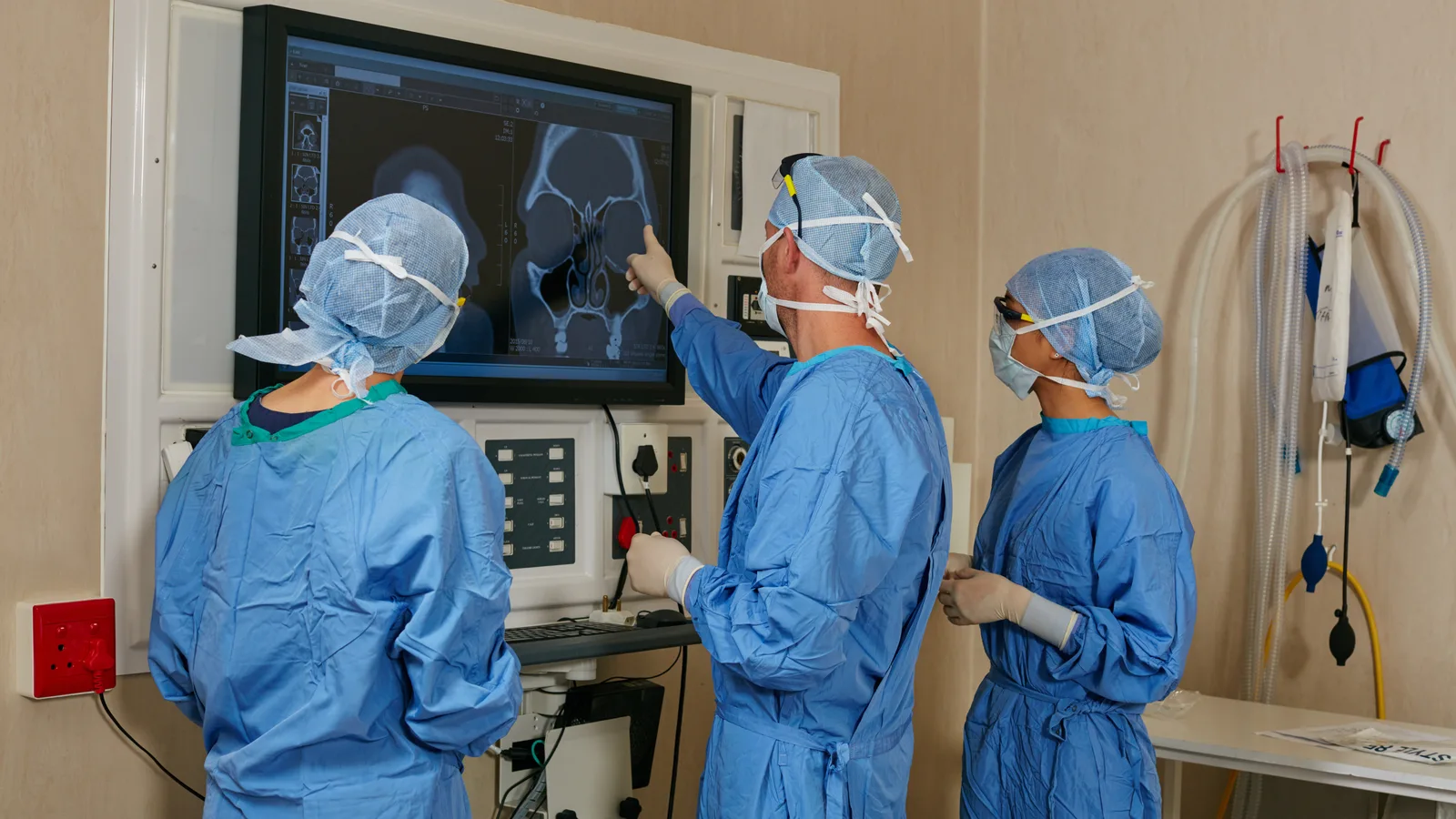
The first commercial case at the hospital was performed by Dr. Ryan Kaple, director of the Structural and Congenital Heart Program at Hackensack University Medical Center, and Dr. Craig Basman, the program's associate director. Dr. Perry Wengrofsky, director of interventional and structural echocardiography, guided the placement with ultrasound imaging during the procedure. The hospital also credits its wider structural heart team of interventional cardiologists, including Dr. Sung-Han Yoon.
Both lead physicians said in the hospital's announcement that the catheter approach lets patients skip a second major heart surgery and recover more quickly.
Why it happened in Hackensack first
Hackensack University Medical Center was one of the sites in PARADIGM, the clinical trial that produced the safety and effectiveness data the FDA reviewed before approving the device. That trial work gave the hospital's team hands-on experience with the occluder before it reached the market, which is how the first commercial case after approval ended up on Prospect Avenue.
The same device has been in use in Europe since 2020, where it is sold under a different name. The FDA approval opens it up to patients across the United States, and the procedure is now offered through the Structural and Congenital Heart Program in Hackensack.
Who should ask about it
The hospital suggests that anyone who had a heart valve replaced in the past and now notices tiredness without a clear cause, shortness of breath or swelling talk with a doctor about whether a paravalvular leak could be the reason. A cardiologist can order imaging to check, and the structural heart team can review whether the catheter repair is an option.
Hackensack University Medical Center is at 30 Prospect Avenue in Hackensack, NJ 07601, and the main hospital number is 551-996-2000. Appointments with Hackensack Meridian Health physicians can be made by calling 1-844-HMH-WELL (1-844-464-9355), booking online, or through the MyChart app. By train, the Anderson Street station on NJ Transit's Pascack Valley Line is a short walk from the campus.
Loading comments…